Learn
Why medical compression?
If you've found your way here, chances are your legs have been bothering you for a while. Maybe they ache. Maybe they feel heavy by the end of the day. Maybe you've been told to just eat less and move more, and it hasn't changed a thing.
You're not imagining it, and you're not alone. One in eleven women struggles with symptoms of lipedema.
So here are the questions women ask us most, answered in plain English. Tap one to open it.
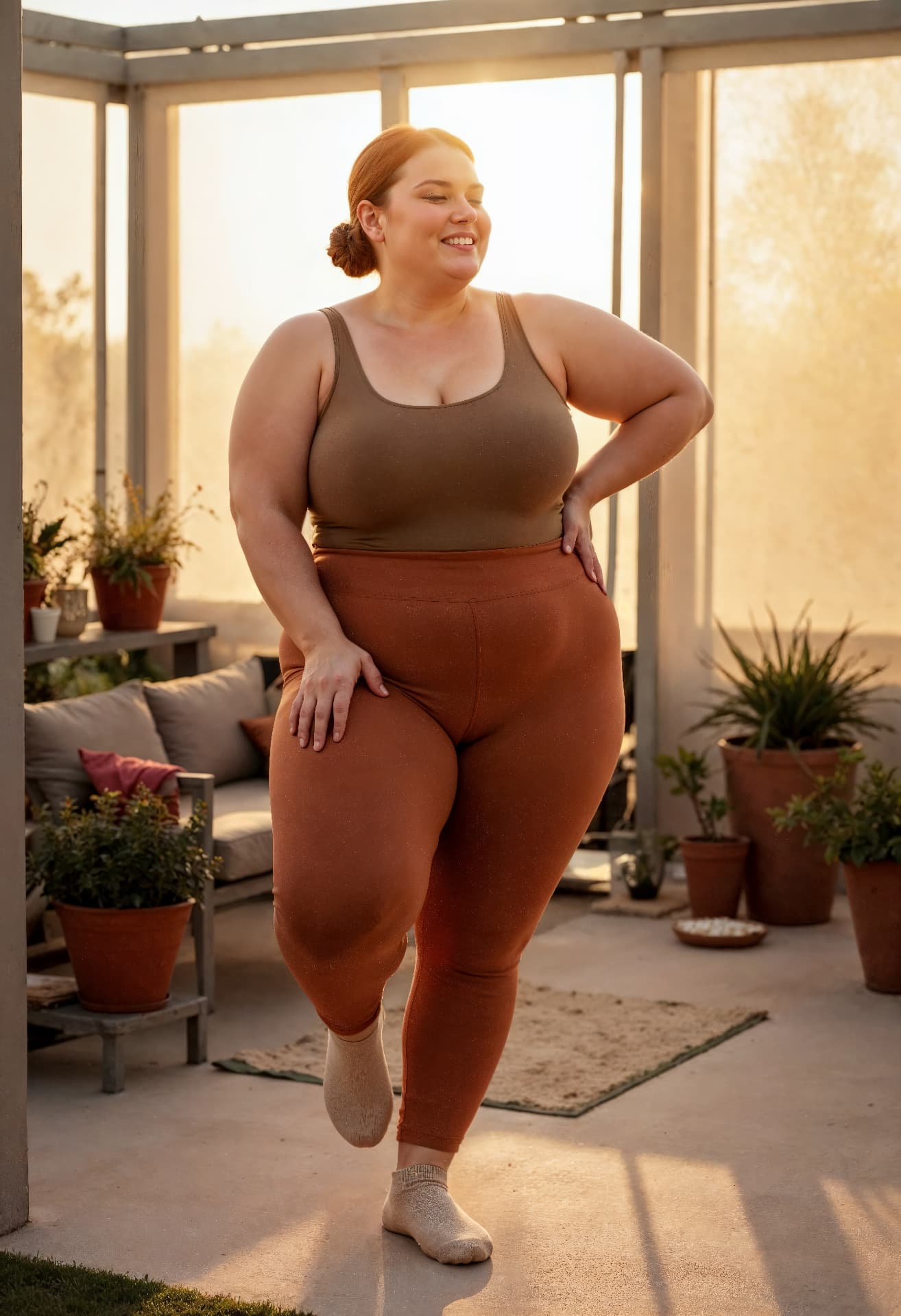
If you're picturing tight socks on a plane or pantyhose from the chemist, you've probably seen some version of medical compression before. It's a health treatment that helps blood and fluid move through your body the way they should.
Thankfully, we are coming out of the dark ages of medical compression that was designed for your nan (sorry, nan!). Our garments offer the same benefits, but are designed with your style and comfort in mind.
Think of it as a gentle, steady hug for your legs or arms. The squeeze is firmest at your ankles or wrists, and it gets lighter as it goes up. This is called graduated compression.
- Better blood flow. That gentle squeeze helps push blood back up to your heart.
- Better lymph flow. Your lymphatic system (lymph system) clears extra fluid and waste from your body. It relies on your muscles moving to do its job. Compression gives your muscles something firm to push against, so fluid moves more easily. This is a real help on days when exercise feels hard, or if getting around is challenging.
- Less swelling. Swelling, also called oedema, happens when extra fluid leaks out of your blood vessels. Compression helps stop that. Swelling that isn't looked after can lead to pain and other health problems.
- More support. Compression holds loose or heavy tissue in place, so moving feels more comfortable. It also means less painful rubbing and chafing.
Doctors often prescribe medical compression for lots of things, including:
- varicose veins
- blood clots in the legs, also called deep vein thrombosis (DVT)
- fluid build-up in the body
- lymphoedema
- healing after surgery.
Do your legs or arms often feel heavy or sore? Do they look bigger than the rest of your body, no matter what you do? You might have lipedema.
You say it like this: lip-uh-DEE-muh. It's also spelled lipoedema.
Lipedema is a long-term health condition where fat builds up in the legs, and sometimes the arms. It can get worse over time. It rarely gets better on its own. It almost always affects women, and it often starts or gets worse when our hormones change, like during puberty, pregnancy or menopause.
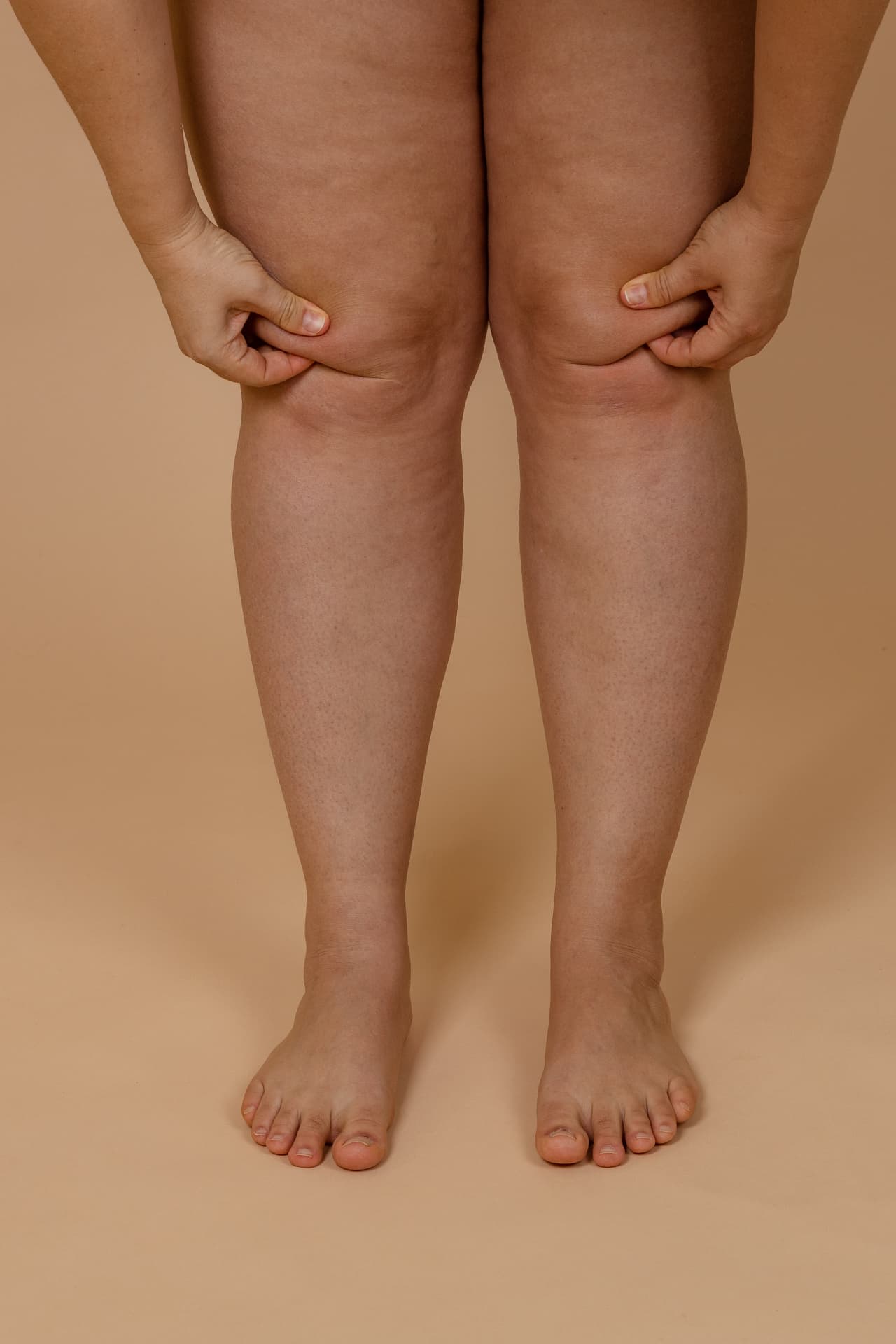
- When it's unrelated to diet or activity levels. Lipedema fat is different from normal body fat. It is tough, fibrotic tissue that is hormonally active and often has a lot of inflammation associated with it. Once formed, diet and exercise don't easily shift it. Lots of women with lipedema eat well and stay active, and the fat still builds up.
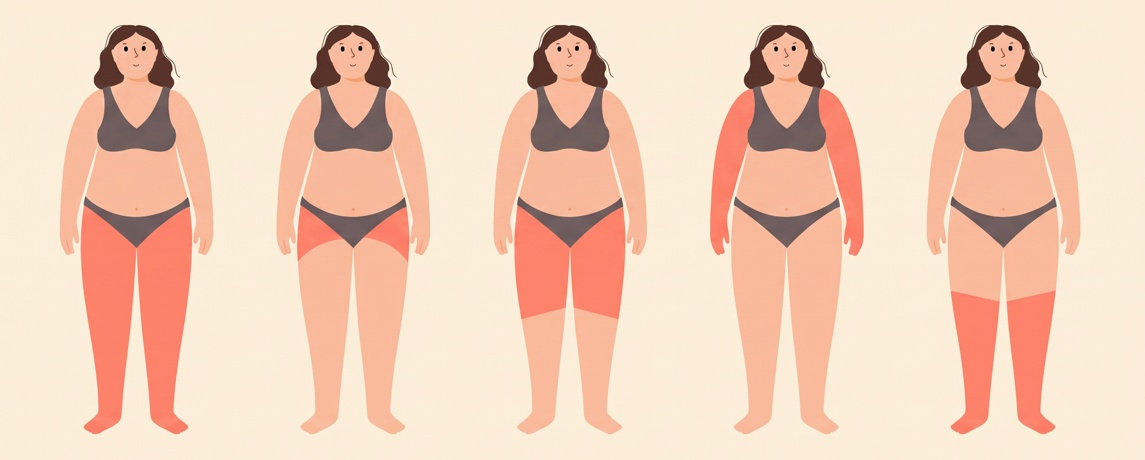
- When it shows up on both sides. Lipedema fat affects both legs, from the hips to the ankles. Sometimes it affects both arms too. It doesn't affect the hands or feet. This can leave a “cuff” or ring of fat just above the ankles, knees or wrists. Although they sound similar, lymphoedema is different. It usually affects only one limb and can cause swelling in the hands and feet too.
- When the pain is real. Lipedema fat is often sore and tender, even to a light touch. It can ache deep down, and it bruises very easily.
If that sounds familiar, the next question covers the stages of lipedema and the common signs that go with them.
Lipedema is grouped into 4 stages. Stage 1 is early. Stage 4 is the most advanced.
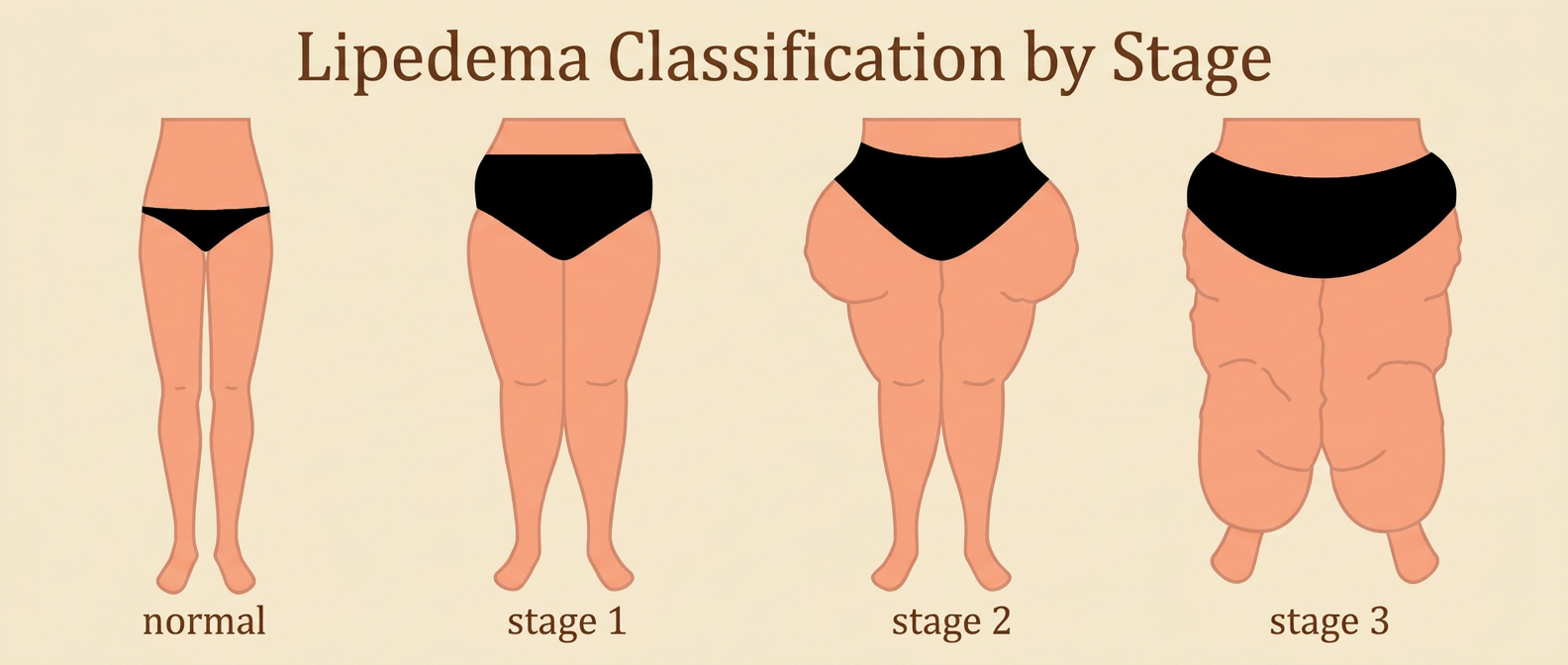
Stage 3 or 4? If you've been told you have stage 3 or 4 lipedema, please reach out to a health professional who treats lymph conditions. You deserve specialist care. You can find one near you on the Australasian Lymphology Association website.
Stage 1 or 2? You may be able to manage it yourself, with the right support. Here's what these stages usually look like.
Stage 1 (early)
What you may notice
- Your skin looks smooth, but there's extra fat underneath.
- Your hips and legs look a bit bigger than your top half.
- Mild aches and heaviness.
- You bruise easily.
What to focus on
- Keep your tissue healthy.
- Calm mild swelling and soreness.
- Start moving your body often.
Stage 2 (middle)
What you may notice
- Your skin looks bumpy or uneven, a bit like a mattress or cellulite.
- You can feel lumps of fat under the skin.
- Pain, soreness and heaviness get worse.
What to focus on
- Support your tissue to ease pain.
- Stop extra fluid from building up.
- Keep moving freely.
We'll be honest with you: compression won't get rid of lipedema fat. But it is the main treatment for lipedema that doesn't involve surgery. That's because it helps with the symptoms that affect your everyday life the most.
Wearing compression every day can help with stage 1 or 2 lipedema in these ways:
- 1. Smaller limbs. Compression moves extra fluid out of your legs or arms. This can bring down swelling, so they may look and feel smaller. The lipedema fat itself will stay.
- 2. Less pain. Lipedema tissue often has poor blood flow and small areas of swelling. Compression helps blood flow and moves fluid out. This can ease those daily aches and tender spots.
- 3. Lighter legs. Compression helps hold up the weight of your tissue. Your legs feel less heavy, and getting through the day is easier.
- 4. Stops fluid building up. Even in early lipedema, fluid can slowly build up in the tissue. Over time, this puts strain on your lymph system. It can lead to another condition called lipo-lymphedema. This is when you have lipedema and lymphoedema together. Compression keeps the fluid moving.
- 5. Protects your joints. Compression holds soft tissue firmly in place. This gives your knees and ankles extra support. It helps stop your joints working too hard because of changes in your leg shape.
If you have stage 1 or 2 lipedema, there are two main types of compression fabric to choose from.
Circular knit
What it is
Thin and very stretchy, with no seams. It's shaped like a tube, like tights or socks.
Best for
Stage 1 and 2 lipedema, when your legs are still an even shape and your skin isn't very sore.
Watch out for
Because it's so stretchy, it can roll up or dig into skin folds, fat around the knees or sore spots. That can hurt. It's why a good fit matters so much.
Flat knit
What it is
Thicker, firmer fabric with a seam. It's made to fit your body's measurements.
Best for
Stage 3 and later, or if you have a lot of pain or lumps of fat in certain spots.
Why it works well
It feels like a firm, comfy sleeve. The fabric is stiffer, so it doesn't slip into creases or dig into your skin. It spreads the pressure evenly over curves and uneven shapes.
Fit is everything. If you have later-stage lipedema, or regular sizes just don't fit you, see a trained lymphoedema therapist. They can measure you and help you choose the right compression class. That just means how strong the squeeze is.
Compression works best as part of a bigger picture. Current research suggests pairing it with other gentle, low-risk ways to care for your body.
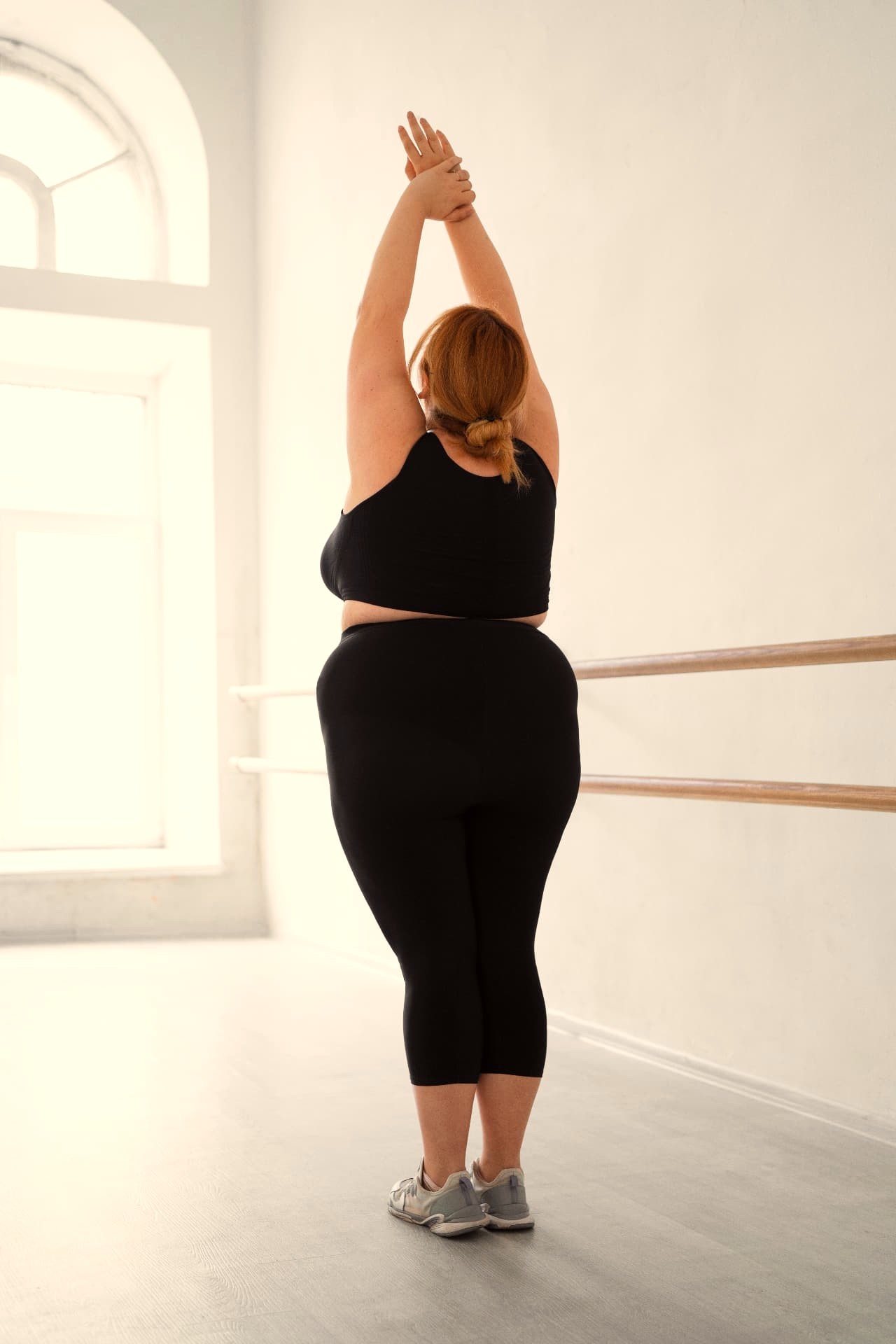
- Move in ways that feel good. Low-impact exercise like swimming, water aerobics, cycling and walking is kind to your body. Wear your compression while you move for even better results.
- Eat to calm inflammation. Lipedema is linked to inflammation. This means parts of your body stay swollen and sore. A heart-healthy eating plan that helps lower inflammation can help.
- Lymphatic drainage massage. This is a special, very gentle massage done by a trained therapist. It's also called MLD. It helps lymph fluid move and softens hard tissue. Many women find it brings real pain relief.
- Be kind to your skin. Keep the skin on your legs or arms clean and well moisturised. This helps protect it from irritation and infection.
You know your body best. If something doesn't feel right, trust that, and talk to your GP or a lymphoedema therapist. And if you have questions about finding the right compression, we're here to help.